
How Liquid Snow Shovel Ice Melt Works: The Science Behind Liquids
When winter hits, the fastest way to safer pavement is to stop snow and ice from bonding in the first place. Learn how liquid ice melt works, what’s happening at the surface, and why liquids out-perform rock salt for both speed and control.
Understand the method, then choose the right product. If you’re evaluating options, see our overview of Liquid Ice Melt and our head‑to‑head Liquid vs Rock Salt comparison.
Explore benefits and applications on the Liquid Ice Melt page.
How does liquid ice melt work?
Breaking the bond between ice and pavement fast
Liquid anti‑icing and de‑icing creates a thin brine film on pavement that disrupts the bond between moisture and the surface. That brine lowers the freezing point so snow and ice can’t lock on, making plowing and shoveling easier and helping residual moisture refreeze more slowly.
If you’ve wondered how liquid de-icer works, here’s the short version:
- It forms an immediate brine on contact.
- That brine depresses the freezing point (freezing‑point depression).
- A thin, even film coats the surface, preventing strong ice adhesion.
- Traffic and plows can then remove accumulation more effectively.
The bond you're breaking
Ice sticks to tiny pores and irregularities in concrete and asphalt. A liquid brine seeps into those micro‑gaps, creating a barrier layer that interrupts crystal formation at the surface. The result: Packed snow releases more easily and black ice has a harder time forming.
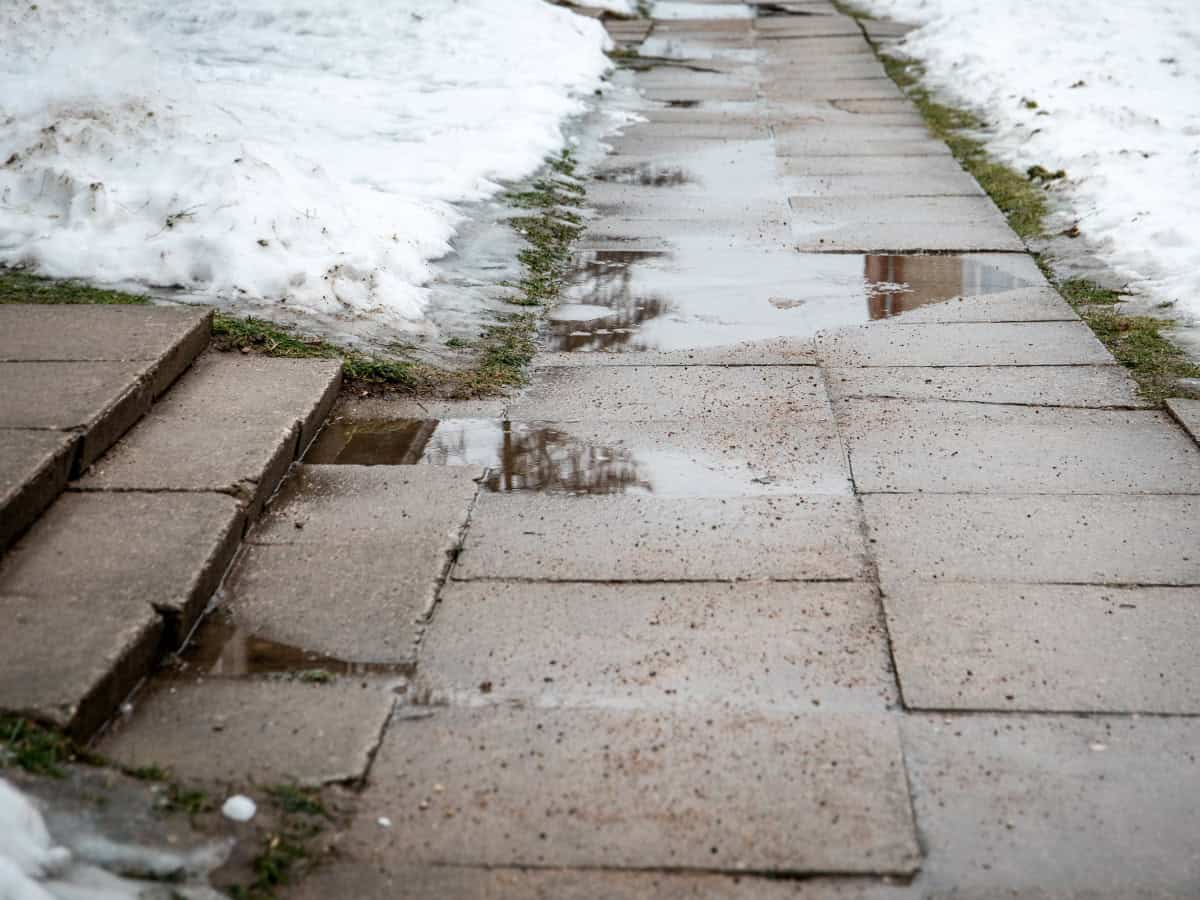
Anti‑icing vs de‑icing explained
Liquid snow shovel will use less product for anti-icing conditions because it takes less thermal energy to prohibit ice than it does to melt ice. Granular products often require time and moisture to form brine, while droplets place the brine exactly where it’s needed.
Anti-icing
Applying liquid snow shovel before or at the start of a storm to prevent bonding. This proactive step keeps first accumulations from grabbing hold.
De-icing
Applying after accumulation to break an existing bond and speed removal. This process takes more material to accomplish the same result as pre-wetting because of the thermal energy it takes to melt versus prohibit.
For deeper comparisons of liquid deicer vs. rock salt and practical advantages across conditions, visit our Liquid vs Rock Salt page.
Calcium chloride: the science behind Liquid Snow Shovel
Liquid Snow Shovel is a calcium‑chloride–based liquid ice melt. Calcium chloride helps in two ways:
- It readily forms brine that stays effective at lower temperatures than many alternatives.
- Its hydration is exothermic, contributing heat during dissolution.
Because the brine wets the surface evenly, you achieve fast action with minimal bounce and scatter. Liquid Snow Shovel is also pet‑safe, eco‑friendly, and 70% less corrosive than rock salt based on the company’s product information—an important consideration for vehicles, concrete, and landscaping.
Learn more about material safety on our Eco‑Friendly & Pet‑Safe page.
Benefits of granular salt
Faster contact:
Brine is active the moment it hits the surface.
Precision:
Droplets stay where you spray—less loss to bounce or wind.
Prevents bonding:
Reduces packed snow and ice adhesion so plows and shovels work better.
Corrosion reduction:
Liquid Snow Shovel is 70% less corrosive than rock salt.
Pet and plant considerations:
Pet and plant considerations: liquid control helps avoid over‑application near sensitive areas
If you’re weighing liquid de-icer vs. rock salt across budgets and service levels, our Liquid vs Rock Salt guide outlines use cases for each.
How to apply liquid ice melt
Application is about even coverage and timing to conditions. The basics:
1.
2.
3.
4.
Because weather and surface conditions vary, follow your product guidance and local best practices rather than fixed rates. For residential walkways and driveways, also see Driveway & Walkway Applications. Facility teams can explore Commercial & Municipal Applications.
Performance, safety, and surfaces
- Pet‑safe and eco‑friendly: Liquid Snow Shovel is formulated to be pet‑safe and eco‑friendly. For details on surfaces, runoff, and landscaping, visit Eco‑Friendly & Pet‑Safe.
- Corrosion and concrete: Liquids reduce scatter and unnecessary contact. Liquid Snow Shovel is 70%-less corrosive than rock salt, an important factor for vehicles, railings, and shop floors.
- Alternatives: Some buyers search for chloride free ice melt. Those products exist and may fit specific environmental policies, but they differ in chemistry and performance. This page focuses on calcium‑chloride liquid systems used for anti‑icing and de‑icing.

FAQs
01
Do liquid de-icers prevent ice from forming?
Yes—when used for anti‑icing, a liquid brine film lowers the freezing point at the surface and helps prevent strong ice bonding. That makes it harder for black ice to form and easier for plows or shovels to clear accumulation.
02
How long before a storm should I apply liquid ice melt?
Timing depends on forecast details (temperature, precipitation type, and start time), surface material, and traffic. Many teams apply shortly before onset for anti‑icing, then re‑evaluate as conditions change. Always follow your product guidance and local best practices.
03
Will liquid ice melt harm plants or pets?
Liquid Snow Shovel is described as pet‑safe and eco‑friendly. As with any de-icer, avoid over‑application and direct runoff into sensitive beds. See our Eco‑Friendly & Pet‑Safe page for considerations and tips.
04
What is the difference between calcium chloride and magnesium chloride?
Both are chloride salts used for ice control. Calcium chloride typically performs at lower temperatures and forms brine quickly. Selection depends on performance goals, policies, and surface considerations. If you are comparing liquid ice melt vs. salt or evaluating product chemistry, start with our Liquid vs Rock Salt resource.
05
Can I mix liquid and granular ice melt?
Yes, many teams pre‑wet salt or apply a liquid for anti‑icing and granular material for post‑storm traction where needed. Ensure compatibility with your equipment and follow product directions.
Conclusion and next steps
Understanding how liquid de-icer works helps you prevent bonding, speed removal, and reduce scatter and corrosion. For a deeper dive into product benefits and fit, explore Liquid Ice Melt, then review our side‑by‑side Liquid vs Rock Salt guide.
Ready to take the next step? Visit Dealers & Distributors to connect with an authorized source.