
Liquid vs. Rock Salt: A Practical Comparison Guide
When winter weather arrives, the big question is liquid de-icer vs. rock salt. This guide compares performance, cost factors, environmental impact, and day‑to‑day convenience so you can choose confidently for your site. Liquid Snow Shovel is a calcium‑chloride–based liquid ice melt designed to pre‑treat surfaces so snow and ice don’t bond. It is pet‑safe, eco‑friendly, and 70%-less corrosive than rock salt.
Looking for product details? See our Liquid Ice Melt page for ingredients, formats, and use cases. Need tailored guidance? Explore Commercial & Municipal Applications or check common questions in the FAQ.
At‑a‑glance comparison
See how liquid de-icer stacks up against rock salt.
| Criteria | Liquid de-icer (calcium‑chloride–based) | Rock salt (sodium chloride) |
|---|---|---|
| Approach | Anti‑icing and de‑icing; apply before or during events | Typically reactive de‑icing after accumulation |
| Surface care | Formulated to be 70% less corrosive than rock salt | Higher corrosion risk to metals and some surfaces |
| Pet and eco profile | Pet‑safe and eco‑friendly positioning | Traditional product; manage site sensitivities |
| Handling | Sprayers/carts for precise, trackable coverage | Broadcast spreaders; more bounce and scatter |
| Cleanup | Bond prevention simplifies plowing/shoveling | Often requires more scraping and reapplications |
Melting performance in real conditions
Tested to perform in the toughest winter weather
Looking for liquid ice melt that you can trust through Michigan winters? All Season Innovations—makers of Liquid Snow Shovel—supports local customers from our headquarters in Nunica, Michigan. We serve homeowners, contractors, facilities, and municipal teams with proven liquid anti‑icing and de‑icing solutions that help prevent snow and ice from bonding to pavement.
For nearby coverage and neighboring cities, see our broader service footprint in the Locations Hub or reach out on our Contact page to request a quote or demo.
Application Use
Anti‑icing vs de‑icing
Liquid de-icers excel at anti‑icing—pre‑treating pavement, walks, and entries so snow and ice have a harder time bonding. By addressing the bond before the storm, cleanup is more efficient and surfaces return to service faster. Rock salt is commonly used in a reactive pattern, focusing on melting after accumulation.
Coverage and consistency
Spraying liquid exactly where people walk and vehicles roll, which can reduce waste and improve consistency on edges, ramps, and stairs. Granular products can bounce, scatter, or be displaced by traffic, leading to uneven coverage and more reapplications.
Temperature notes
Exact performance depends on product and conditions. Liquid Snow Shovel is calcium‑chloride–based; rock salt is sodium chloride. If you need specific temperature ranges for SOPs, request data on How Liquid Ice Melt Works or reach out via Contact.
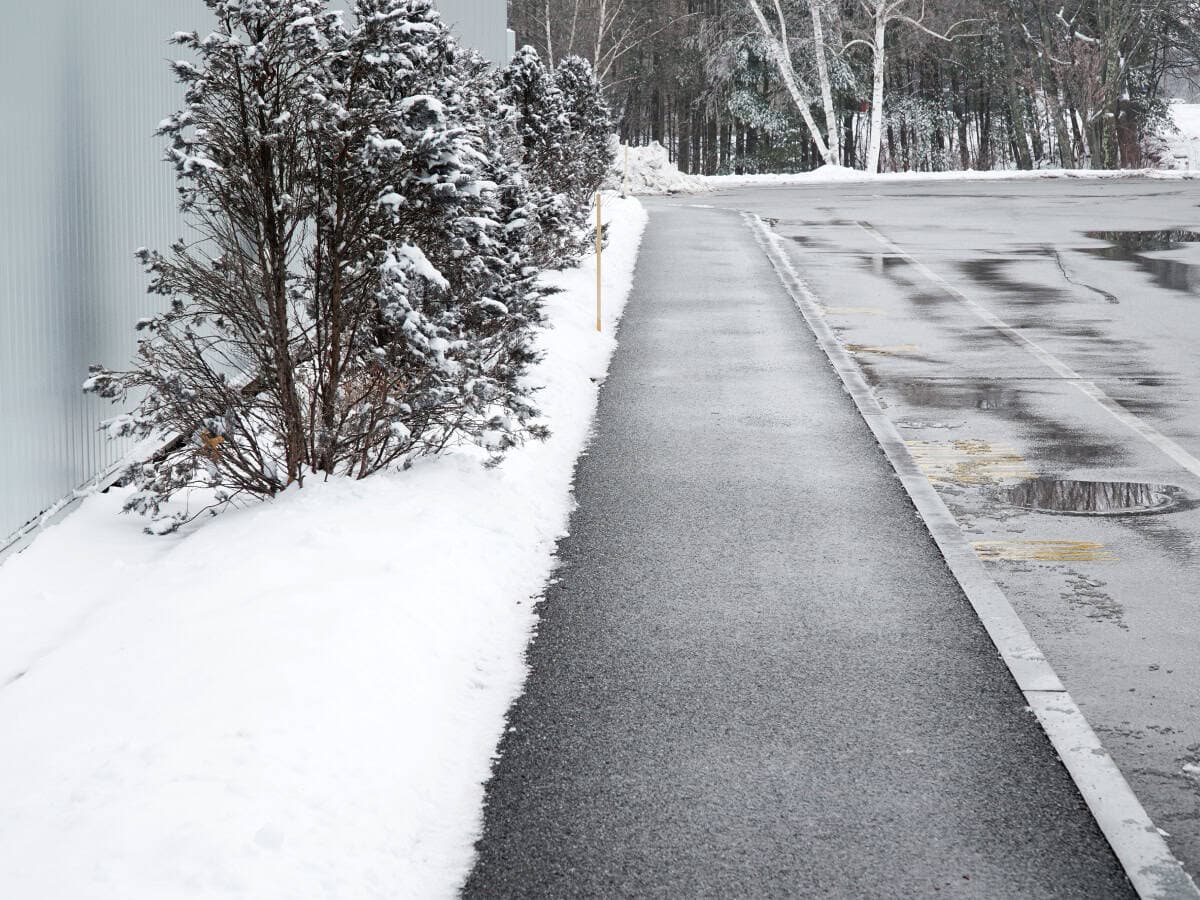
Calcium chloride vs sodium chloride
Understand the science behind superior melting power.
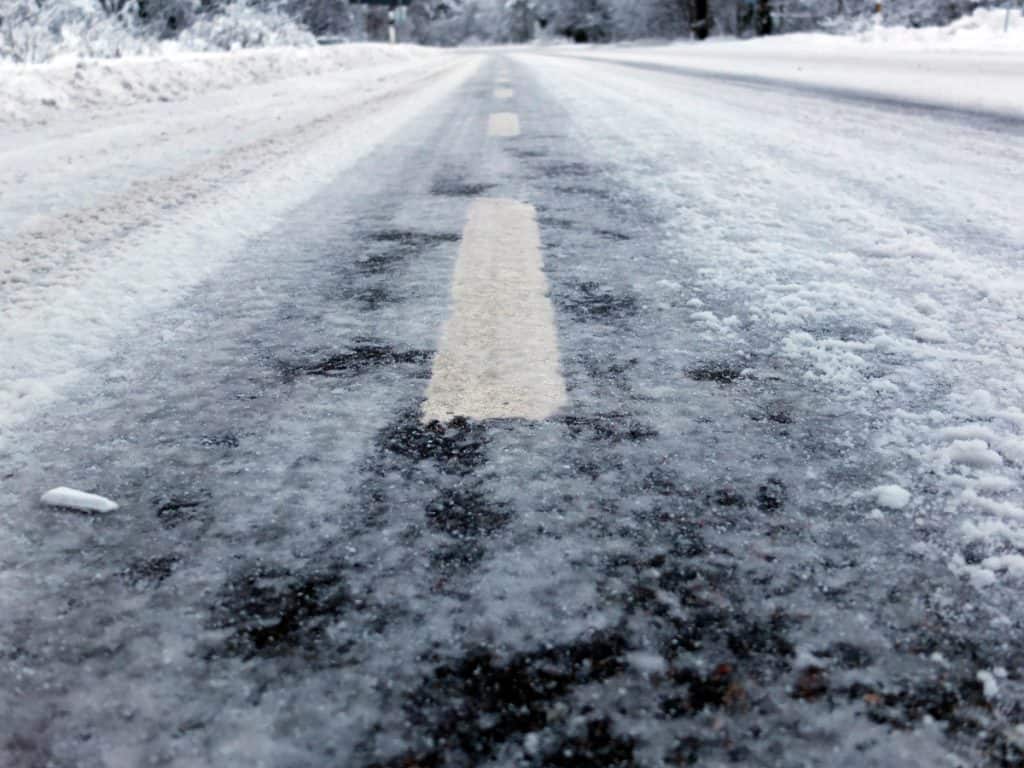
Active ingredient basics
- Liquid Snow Shovel: calcium‑chloride–based liquid designed for anti‑icing and de‑icing.
- Rock salt: traditional granular sodium chloride
Both are proven, but form factor and application method drive different outcomes. Liquids support pre‑treating; granular salt is often broadcast in response to conditions.
What this means for your site
- Entrances, stairs, and tight walkways benefit from precise spray patterns.
- Lots and long sidewalks can be pre‑treated for easier plowing and shoveling.
- If you rely on granular only, adding a liquid option broadens your toolkit.
Environmental and surface impact
Liquid Snow Shovel is 70%-less corrosive than rock salt and is promoted as pet‑safe and eco‑friendly. That matters for:
- Protecting metal infrastructure like rails, doors, and loading equipment
- Sensitive landscaping near walkways
- Decorative concrete, stone, and pavers
For details on materials, pets, and planting beds, see Eco ‑ Friendly & Pet ‑ Safe.
Convenience, operations, and total cost
Liquid Snow Shovel simplifies application and storage, reducing labor, equipment wear, and material waste—helping you save time and money all winter long.
Application workflow
- Pre‑event: apply liquid to high‑traffic areas to help prevent bond formation.
- During the event: spot‑treat slick zones quickly with a sprayer.
- After plowing: a light follow‑up can speed dry‑out.
Tracking and training
Sprayers and dedicated carts help standardize coverage and support repeatable routes. Clear SOPs mean crews can deliver consistent service quality shift to shift.
Budgeting view
Unit cost and usage vary by site and weather. Many teams value the advantages of liquid ice melt for bond prevention, simplified cleanup, and reduced surface wear risk compared with rock salt. For a property‑specific estimate, our team can review your routes and objectives.
When to choose liquid vs. granular ice melt
- Choose liquid for anti‑icing, precision around entries, stairs, and ADA routes, and when you want to make plowing and shoveling easier.
- Choose granular for quick coverage when you need immediate traction material and don’t have liquid equipment available.
- Best‑of‑both: Many operations apply liquid first, then target remaining trouble spots with granular.
If you maintain corporate campuses, schools, or municipal routes, see examples on Commercial & Municipal Applications. Residential teams can explore Driveway & Walkway Applications.
Rock salt alternatives
Considering rock salt alternatives? A calcium‑chloride–based liquid like Liquid Snow Shovel allows pre‑treatment and targeted de‑icing. Some buyers also research chloride free ice melt for specific environments. Performance and compatibility can vary—review your surface types, environmental priorities, and service level targets, then choose accordingly. For ingredient guidance, start at FAQ or connect via Contact.

How to switch from rock salt to liquid deicer
1. Identify priority zones
2. Equip for precision
3. Set SOPs
4. Source supply
5. Review and refine
FAQs
01
Does rock salt work at the same low temperatures as liquid snow shovel?
No, Liquid Snow Shovel is calcium‑chloride–based and works to minus -25F, while rock salt is sodium chloride and works to 20F. For specific ranges, request current data via Contact.
02
Is liquid de-icer more expensive than rock salt?
Unit pricing and total cost vary by site and weather. Many teams evaluate liquid on outcomes—anti‑icing, targeted use, and surface care—rather than price per unit alone.
03
Will rock salt harm concrete and vegetation?
Chloride exposure and over‑application can be hard on surfaces and plants. Liquid Snow Shovel is pet‑safe, eco‑friendly, and 70%-less corrosive than rock salt.
04
When should I choose granular versus liquid ice melt?
Use liquid to pre‑treat and for precision; use granular for quick broadcast coverage and immediate traction. Many operations use both.
05
How do I switch from rock salt to liquid deicer?
Start with high‑impact zones, add the right sprayer equipment, document SOPs, and line up supply with dealers.
Next steps and helpful links
- Compare formulations and see how anti‑icing works on How Liquid Ice Melt Works.
- Get supply and pricing via Dealers & Distributors.
- Prefer to talk it through? Message us on Contact.
CTA: Ready to pilot liquid on a route? Speak with a de‑icing specialist today.